Case Study / Club & Lounge
Funktion-One hardware restored and the low end re-tuned around the central bar instead of replacing everything.
Project summary
- Challenge
- Drivers and crossovers had deteriorated; harsh sound, weak bass; a large bar created an obstacle and phase cancellation spots.
- Solution
- Bench testing and component restoration, added amplifiers, subs rearranged left/right, time alignment and limiters on the DSP.
- Result
- Everything still worth keeping was kept, the worn parts were dealt with, and the system was tuned around the real floor plan.
From First Survey to Handover
01 / Diagnosis
Amara Club runs as a High-Energy Club in Bien Hoa, which calls for tight, fast bass while keeping detail in the mid/high. The venue’s existing Funktion-One Dance Stack system had deteriorated badly: the sound was distorted and harsh, the low end lacked punch and it collapsed at high power. A technical check found leaking or dried-out capacitors on the crossover boards, deformed speaker cones and weakened magnets. The low 4m ceiling and a large square bar right in the middle of the floor formed an architectural obstacle that caused low-end phase cancellation and trapped reflections, leaving the centre 8–10dB off from the rest of the room.
02 / Engineering decision
Instead of advising the client to replace the whole expensive system, we chose to restore the hardware. Every Funktion-One driver was removed and its Thiele-Small parameters measured; leaking capacitors were replaced with high-grade audio capacitors, the suspensions replaced and the magnets remagnetised, followed by functional and response checks. We added high-headroom Linea Research amplifiers with a high damping factor to keep tight control of the cones, and reconfigured the subwoofers (two double 2×18-inch subs) as Sub Left/Right with alignment checked in the listening areas on both sides of the bar. On the DSP, we time-aligned everything at the selected measurement positions and hard-locked the Peak/RMS Limiter thresholds to reduce overload risk within the agreed operating limits.
03 / Verification and value
Low-frequency SPL at the central bar rose by a measured 5dB, with even coverage within ±2dB across the full 180m².
“We thought the Funktion-One rig would have to be thrown out, but after Tony Lab restored it and set it up again with Linea Research amplifiers, the bass hits round and tight, the mids are clear, and the speakers stay cool all night without the breakdowns we used to have.”
The Project in Pictures
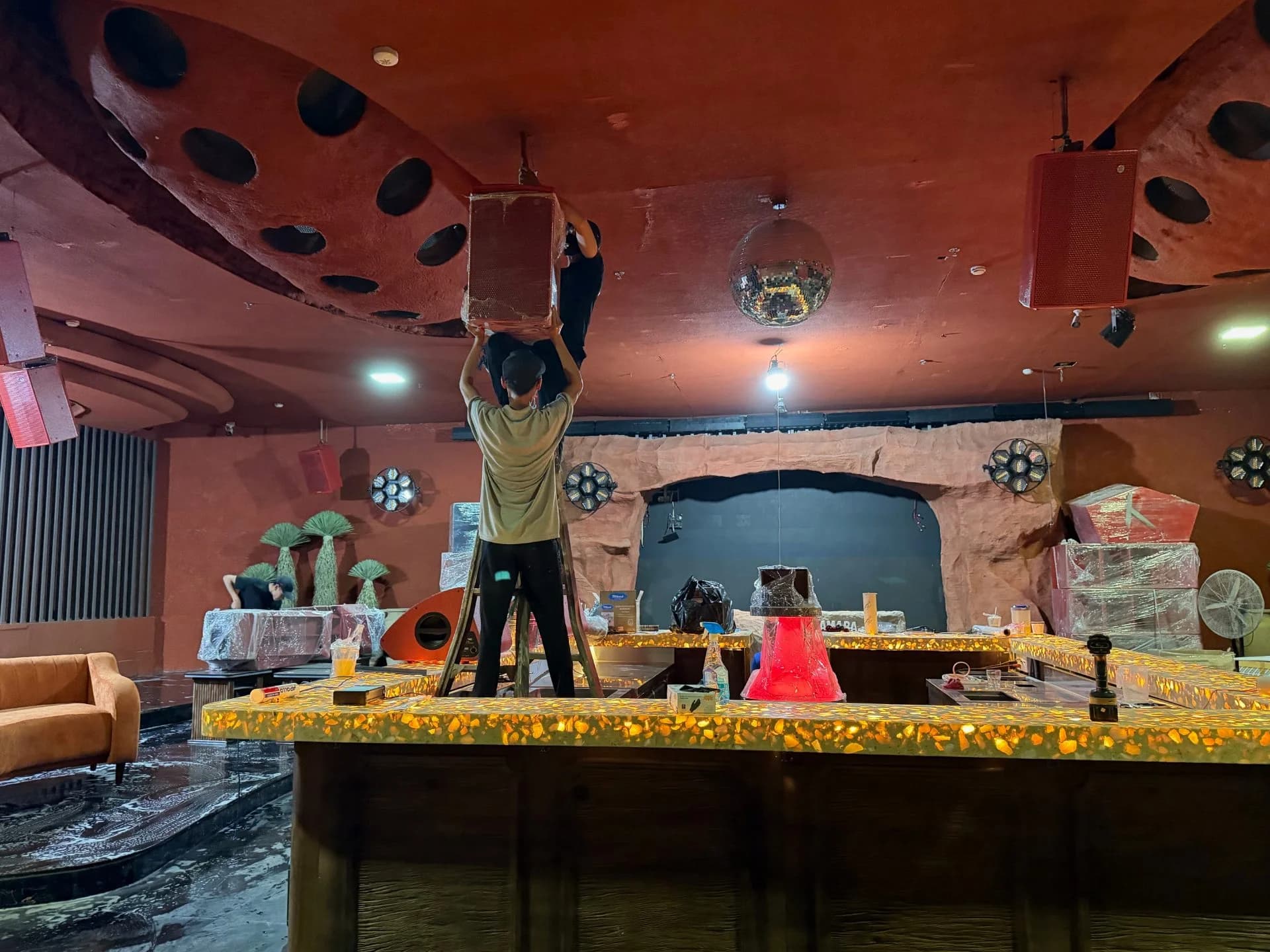
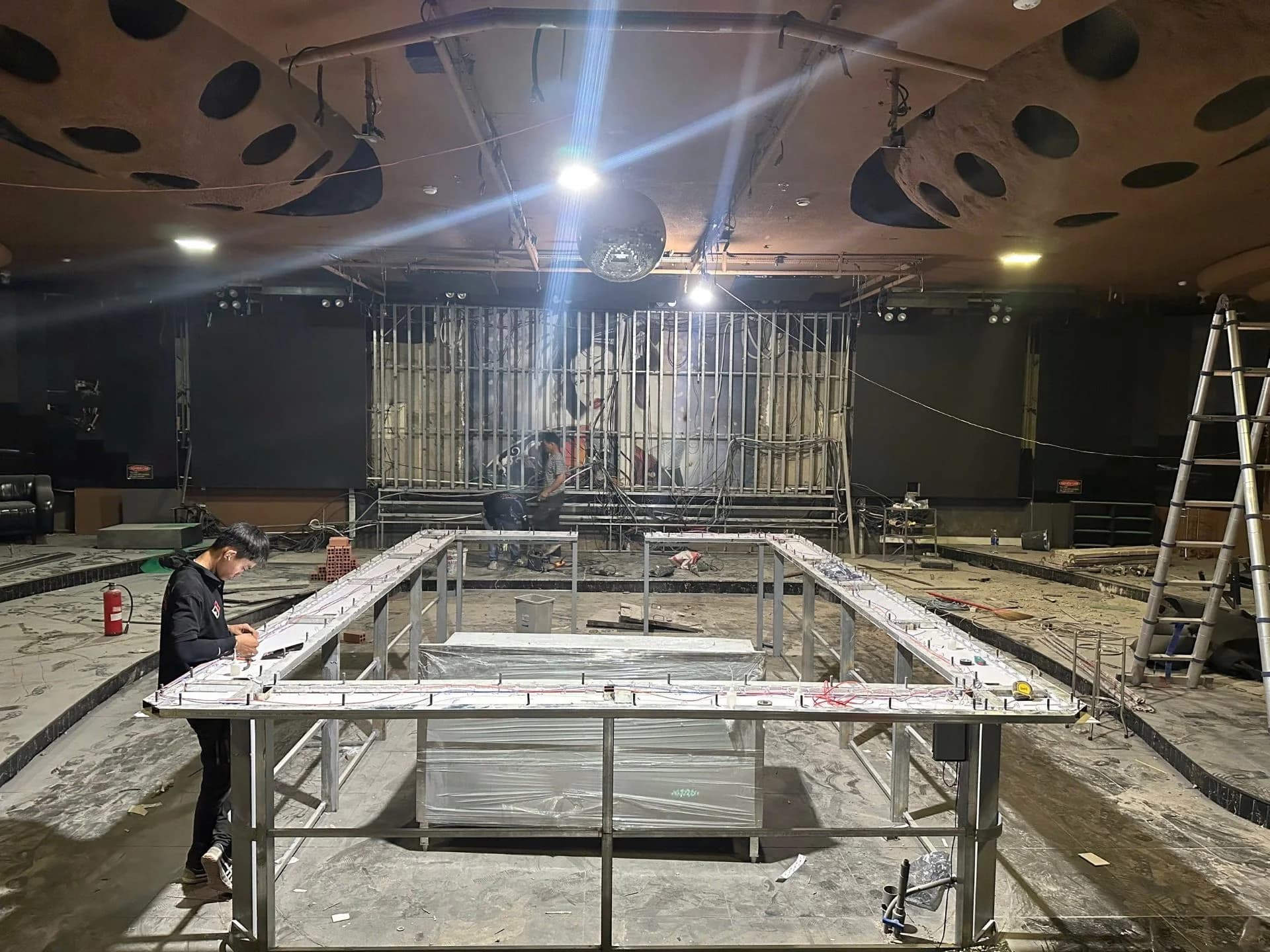
01 / 02 — Installing ceiling-mounted delay speakers above the central bar at Amara Club.
Before and After
| Metric | Before | After |
|---|---|---|
| Bass SPL at the bar | Lacking punch, 8–10dB off | +5dB, even within ±2dB |
| Driver condition | Dried capacitors, deformed cones, weakened magnets | Drivers checked after component repair |
| System protection (Limiter) | None installed, easy to burn out | Peak/RMS Limiters locked on the DSP |
| Subwoofer placement | Placed freely, blocked by the bar | Sub Left/Right configuration wrapping the bar |
| Budget efficiency | Risk of a costly replacement | Suitable existing equipment retained; worn components repaired or replaced |
Frequently asked questions
Why do Funktion-One speakers start to distort or lose punch after years of use?
After years of high-power use in a club, the capacitors on the passive crossover boards dry out or leak, the suspensions are stretched and the driver magnets weaken. Checking them, replacing the leaking parts and remagnetising the magnets brings the drivers back to their original response.
What does adding Linea Research amplifiers bring to a Funktion-One system?
Linea Research provides high-headroom power stages with a high damping factor, keeping precise control over the Funktion-One cone movement — deep, round bass and minimal distortion at high volume.
How does a low 4m ceiling in a 180m² club affect the sound setup?
A low ceiling shortens the reflection path from the speakers to the ceiling, easily causing harsh mid/high reflections. The answer is to adjust the down-tilt of the tops, cut the ceiling’s resonant frequencies on the DSP and aim the coverage directly at the audience.