Case Study / Club & Lounge
Main PA and fill speakers matched to the same sound, with even VIP coverage and a controlled budget.
Project summary
- Challenge
- A near-square plan, a high ceiling and a bare shell prone to reverberation, room modes and a gap between the main floor and the VIP area.
- Solution
- Main PA and delays with the same sonic character, an L/R sub array, time/phase alignment and multi-stage limiters.
- Result
- The main floor and the VIP area are designed as one continuous listening area, with a consistent sound and equipment placed where it is needed.
From First Survey to Handover
01 / Diagnosis
After the success of Lox Club, in mid-2021 the Co-Founders expanded the business with Human Lounge in Binh Duong and asked Tony Lab Audio to advise on a complete sound solution from the bare-shell stage — a powerful high-energy sound with a controlled initial investment. The double-layer industrial brick shell isolates the sound very well from the outside.
02 / Engineering decision
We hung a Verity Monster 4-Way Main PA over the central stage area, calculating the load and fabricating a reinforced rigging frame at 6m, and fine-tuned the Tilt Angle to limit ceiling reflections. To keep within budget while holding the same Sonic Signature, we used Verity Muse 12 as Delay/Monitor speakers and added four 15-inch full-range speakers for the rear VIP area, filling the dead spot created by the 17m distance. For the low end, 6 single 21-inch subwoofers are configured as a Sub Left/Right Array with electronic phase alignment — spacing and phase settings were checked across the listening areas; L/R placement alone does not create rear rejection. On the DSP, we set precise crossovers for the 4-Way system and the subs, time-aligned the Main, the subs and the satellite speakers at the selected measurement positions to remove phase smearing, and locked multi-stage Peak/RMS Limiters to protect the drivers at high levels every night.
03 / Verification and value
Level differences between the centre and the farthest VIP table were below 3.5dB at the surveyed positions. The system was handed over with protection settings and an operating procedure for the venue.
“Tony Lab gave us a sound system that is powerful and tight but never harsh. Guests at the VIP tables at the back still hear every detail of the music without the system being pushed too hard. Five years of smooth operation is the clearest proof of its quality.”
The Project in Pictures
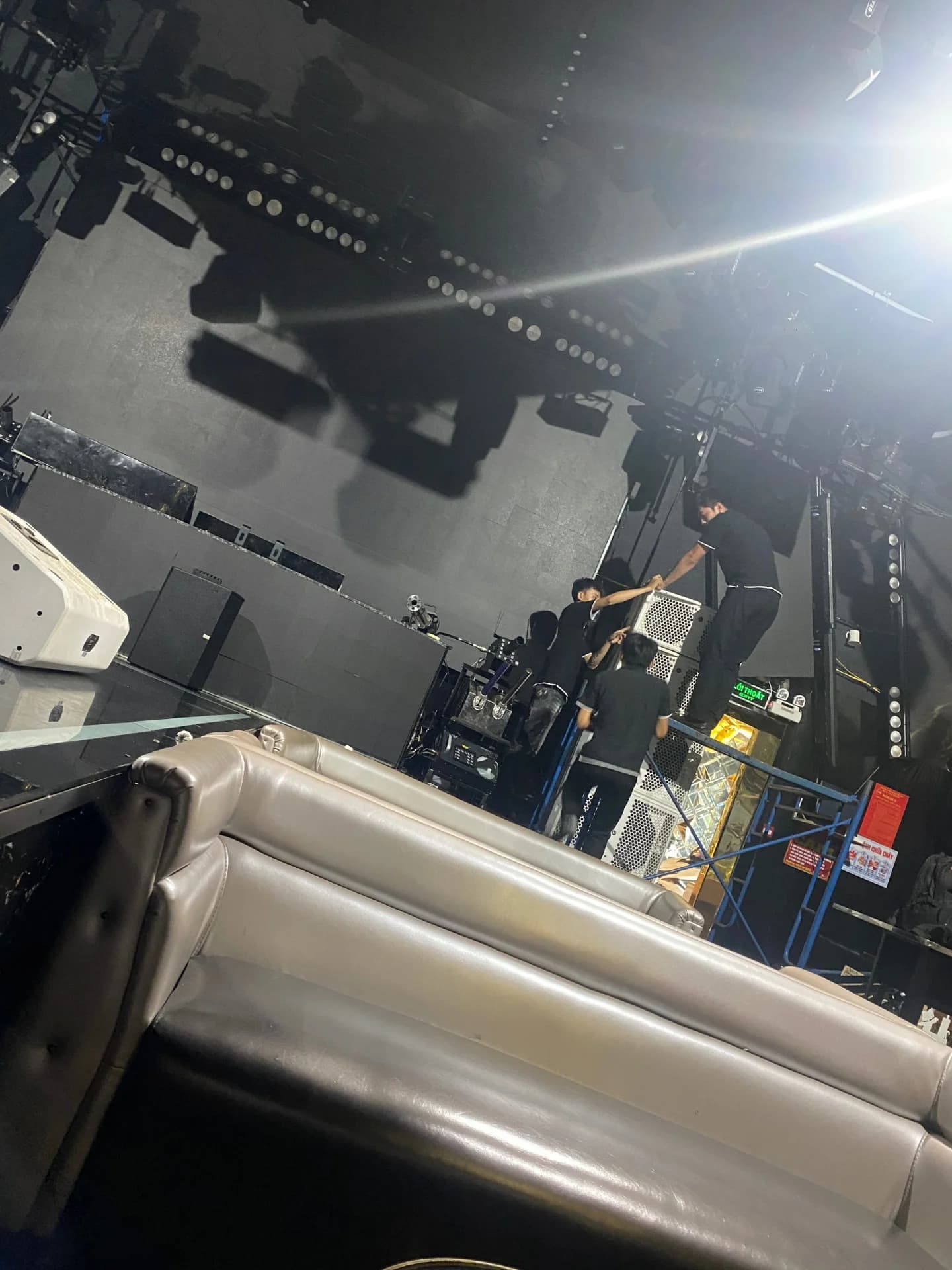
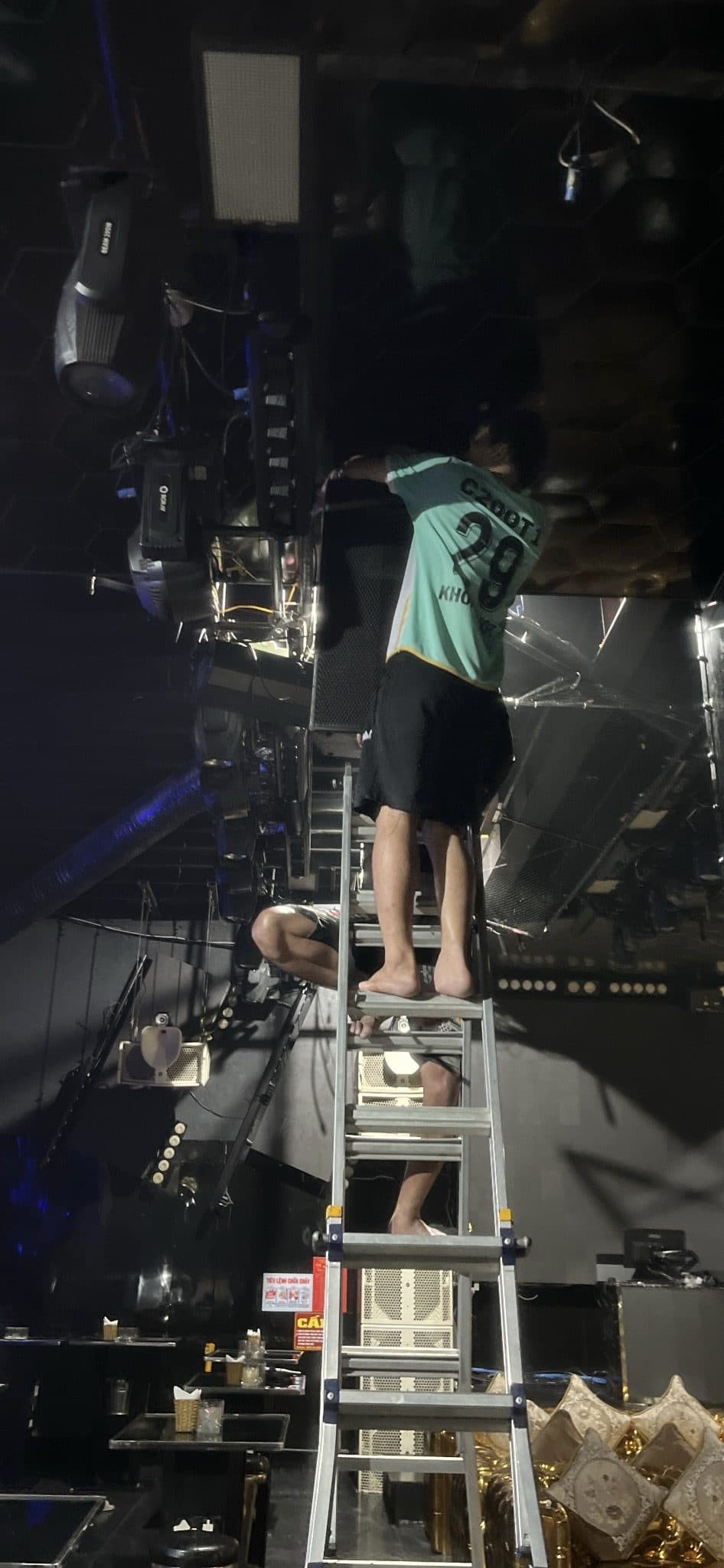

01 / 03 — The Tony Lab Audio team rigging the Main PA on its frame at Human Lounge.
Before and After
| Metric | Before | After |
|---|---|---|
| Pressure & uniformity (SPL) | Uncontrolled, risk of boom at the 42Hz and 85Hz room modes | operating levels checked at handover, less than 3.5dB variation across the space |
| Subwoofer configuration | Risk of room-mode resonance if the subs were piled in one corner | Split Sub L/R Array, electronic phase alignment, even low end |
| Equipment investment | Top-end speakers planned for 100% of the space | Speaker placement, acoustic treatment and tuning were coordinated, with operating presets and protection thresholds at handover. |
Frequently asked questions
How can a club or lounge sound system cost less and still deliver a high-energy experience?
Speaker placement, acoustic treatment and tuning were coordinated, with operating presets and protection thresholds at handover.
Why shouldn’t all the subwoofers be placed in one corner of a square room?
Check room modes, array spacing and phase at several listening positions before choosing the layout. An L/R arrangement can produce interference and a power alley; it does not by itself create rear rejection towards the DJ booth.
Does a 17m × 16m × 6m space reverberate easily, and how is it treated?
A length and width that are almost equal easily create standing waves in the bass, while a 6m ceiling adds ceiling reflections. The answer is to hang the Main speakers at the right tilt to aim the sound straight at the listeners, combined with mid-high absorption on the ceiling and walls and cutting the problem frequencies with the DSP Equalizer.