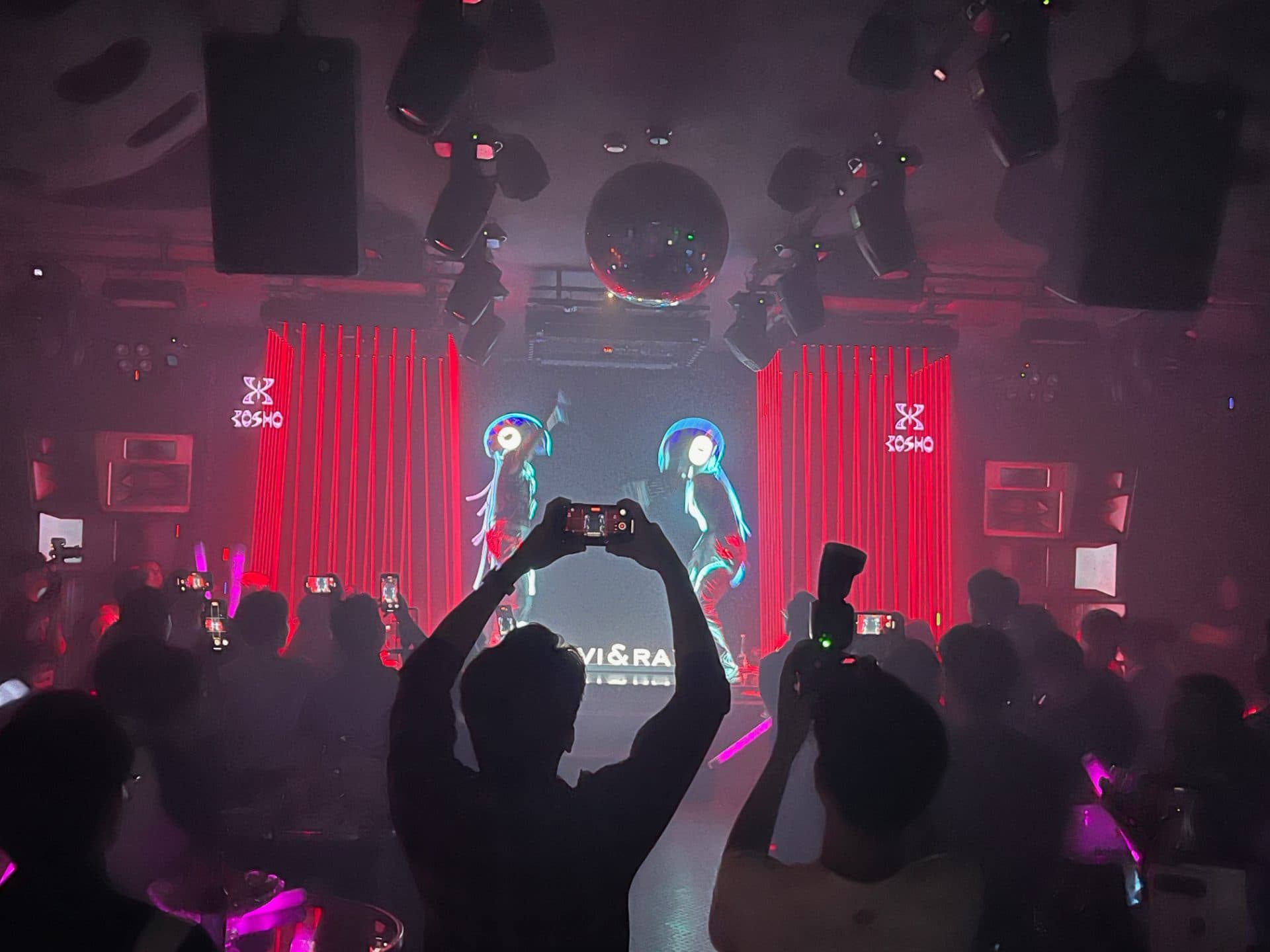
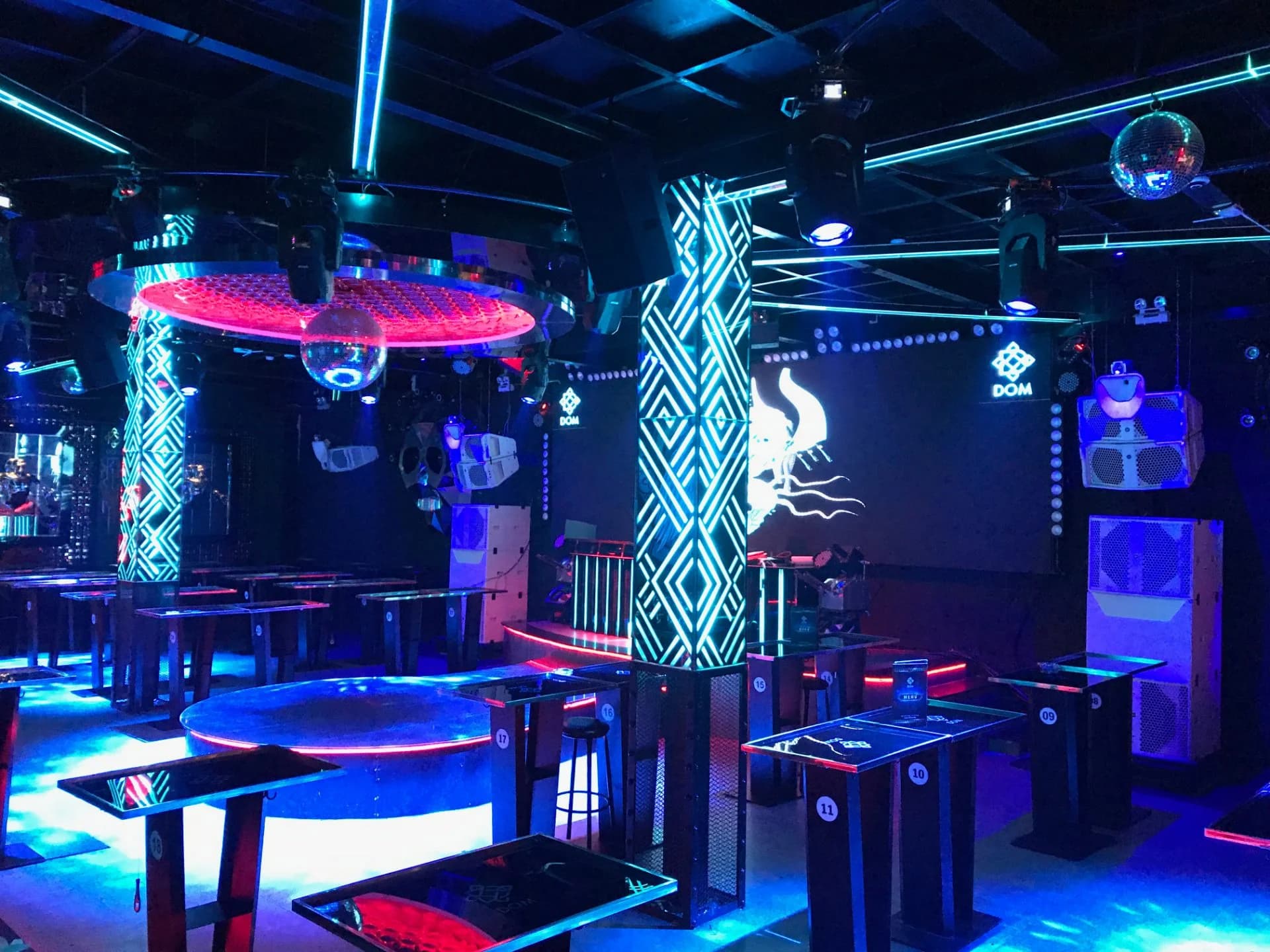
Case Study / Club & Lounge
Low end and coverage optimised for a nightclub with thick walls, a high ceiling and strong reflections.
Project summary
- Challenge
- Brick walls holding a lot of bass energy; a high ceiling and a concrete floor adding low-mid reflections.
- Solution
- Main angles calculated for the dance floor, zone fill for the VIP area, phase-aligned subs and multi-stage limiters.
- Result
- The dance floor and the VIP area are tuned zone by zone; the low end is phase-aligned and protected by multi-stage limiters.
From First Survey to Handover
01 / Diagnosis
Following the success of Kosho Club Bien Hoa, in mid-2020 the Co-Founders expanded to Vung Tau and asked Tony Lab Audio to advise on the whole sound solution while the building was still on the drawing board. The 60cm solid brick shell isolates the sound naturally and very well from the outside, but together with a 4.8m ceiling and a concrete floor it creates very strong bass and low-mid reflections unless they are well controlled — the thick walls allow reflected bass energy to build up in the room, easily building standing waves in the 40Hz–80Hz range.
02 / Engineering decision
We calculated the angles and hung the Verity Monster 4-Way system from the ceiling to aim the energy straight down at the dance floor and reduce ceiling reflections. 6 Verity Monster speakers were set up separately for the rear VIP area to make up the sound pressure without forcing the Main PA to overwork. For the low end, we configured a Sub L/R Alignment — optimising the spacing and phase between the six 21-inch subs for an even, punchy bass to reduce cancellation at the surveyed dance-floor positions. On the DSP, we fully matched the timing and phase between the subs, the 4-Way Main and the Verity Monster delay speakers, reduced excitation of problem room modes using crossover and parametric EQ settings, and locked multi-stage Peak/RMS Limiters so the system operates within agreed level and headroom limits.
03 / Verification and value
The surveyed level difference between the dance floor and VIP tables was below 3dB. A monthly maintenance plan includes cooling, cabling, driver checks and review of protection settings.
“Tony Lab’s support, from the drawings through to monthly maintenance over many years, is the key that has kept Lox Club’s premium entertainment experience going in Vung Tau.”
The Project in Pictures
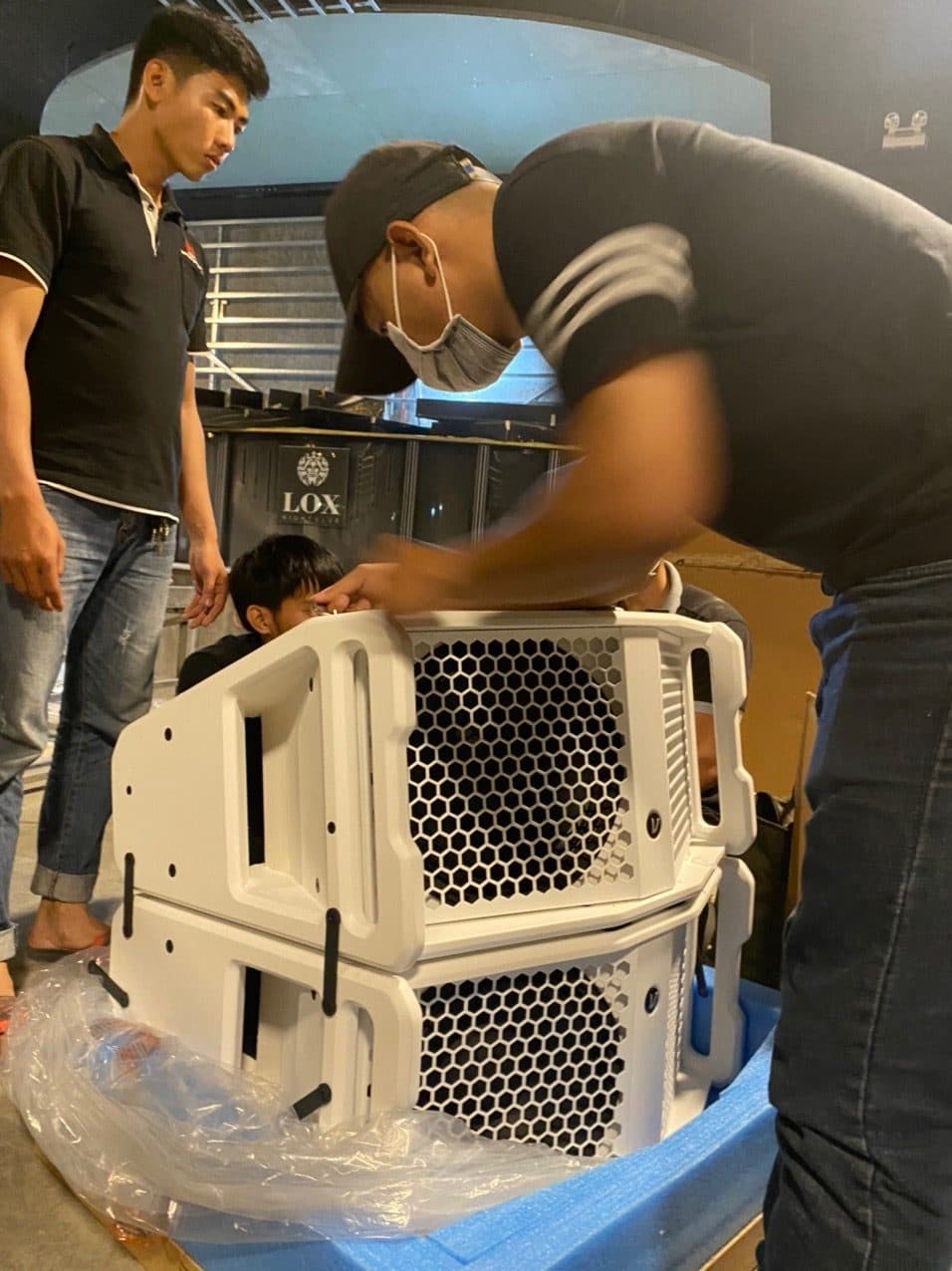
Before and After
| Metric | Before | After |
|---|---|---|
| SPL uniformity across the floor | Uncontrolled, risk of standing waves at 40–80Hz | operating levels checked at handover, less than 3dB between the dance floor and VIP |
| Sub configuration | Risk of phase cancellation in the centre of the floor | Sub L/R Alignment for six 21-inch subwoofers, an even and punchy low end |
| VIP sound pressure | Risk of overworking the Main PA to reach the rear VIP area | 6 Verity Monster delay speakers covering the VIP area, Main PA not overloaded |
Frequently asked questions
What are the advantages of a 4-Way speaker system over an ordinary 2-Way/3-Way one in a club?
A 4-Way system splits the frequency range into smaller bands (Sub, Low-Mid, Mid, High), so each driver works in the range it handles best — more detail, deeper bass, smoother highs and far less distortion at high power.
Why does a room with thick, well-isolated walls still need acoustic treatment and DSP?
Thick masonry can improve isolation, but room modes and reflections still depend on the room geometry and surface absorption. Speaker placement and DSP can reduce uneven excitation; decay and reflected sound may also require acoustic treatment.
What does a monthly sound maintenance service for a club include?
Cleaning the amplifier cooling, checking the phase of each speaker band, re-measuring distortion, checking the signal cables and updating the Limiter/DSP settings to the current condition of the equipment.