Case Study / Church Audio
Sound standardised across three floors, with a preset for each celebration so non-specialists run it reliably.
Project summary
- Challenge
- A worn-out old system; a low ceiling prone to reverberation; each floor and each celebration used differently.
- Solution
- Three-floor zoning, FIR correction, microphone gain management and scene buttons for non-specialist operators.
- Result
- Each of the three floors has its own operating zone, presets switch between uses quickly and the space keeps its solemn character.
From First Survey to Handover
01 / Diagnosis
My Phuoc Chapel (Phu My Hung, District 7) spans three floors — the ground, first and second floors, where the main chapel and its corridor sit. Before Tony Lab Audio took it on, the old sound system had failed badly and could no longer serve the liturgy. The priests’ homilies had to be highly intelligible, and the choir and the piano had to blend without drowning out the spoken responses. The chapel ceiling is only 2.8m high over a length of 25m and a width of 12m — proportions that easily cause ceiling reverberation and Mid-Low standing waves unless the speaker coverage is chosen precisely. The use changes from day to day, from weekdays to major feasts and children’s Masses, and the Sisters who run it have no audio background — running it had to come down to a single button.
02 / Engineering decision
We installed YME Audiotechnik CS 9P speakers along both side walls of the chapel — their compact design blends into the architecture without spoiling it — and set FIR Phase Correction filters for all of them so the midrange of the homily is smooth and every syllable clear. We programmed a Multi-KEY system (One-Touch Presets) on the central processor — each key stands for a day of the week or a type of liturgy; the Sisters press a single button and the whole floor-by-floor routing, the Gain/EQ settings and the set of active microphones jump to the preset already optimised for it. We configured microphone and instrument routing, levels and scene presets for each celebration. We also reused an existing Roland amplifier as a dedicated monitor for the piano and guitar position.
03 / Verification and value
STI improved from 0.45 (fair) to 0.72 (good). Three-floor zoning and Multi-KEY presets simplify routine operation, while the existing Roland monitor remains in use.
“It sounds wonderful, Nhan! The piano is natural and clear, and the homily is bright, every word distinct, without being harsh.”
The Project in Pictures
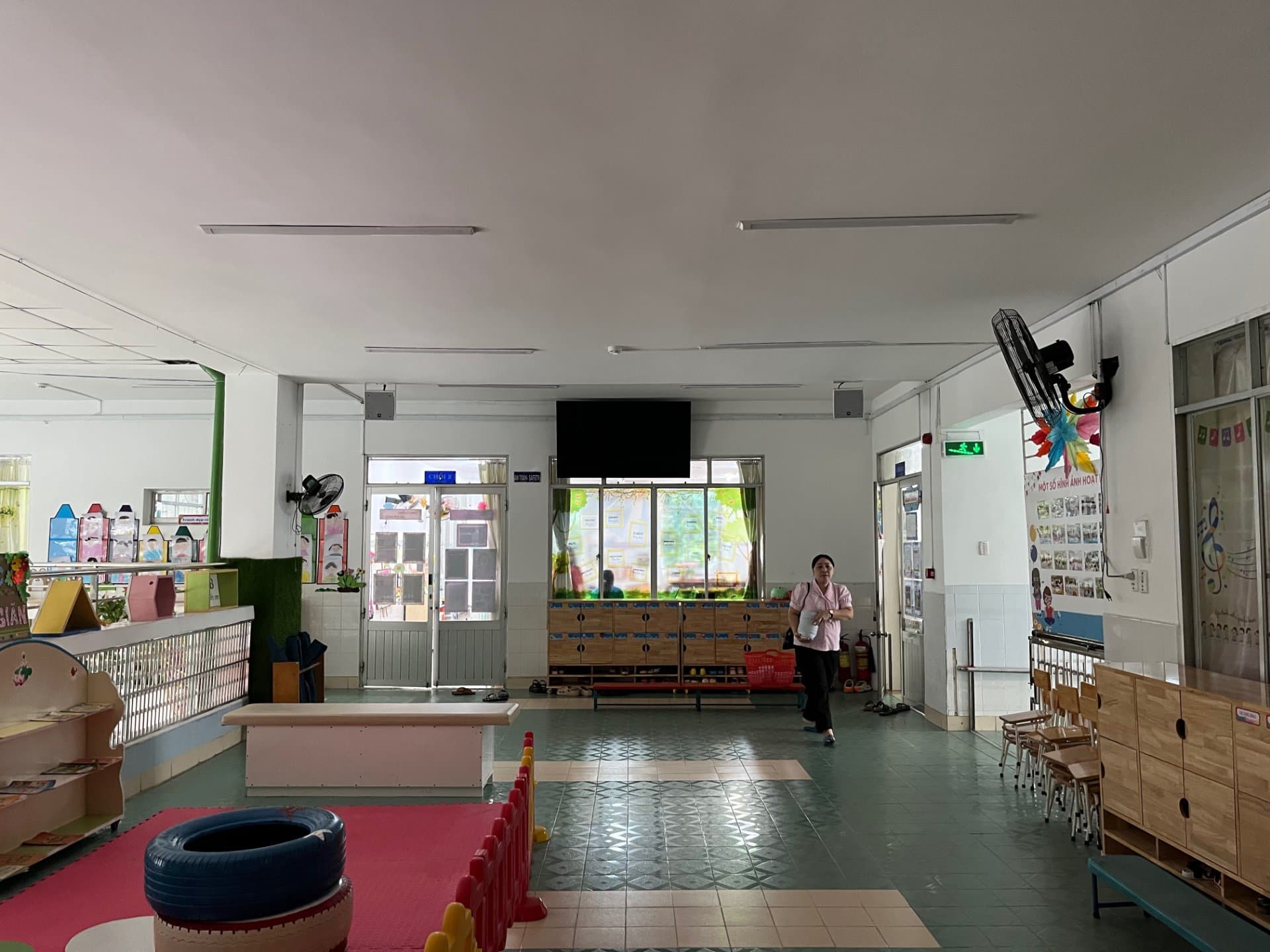
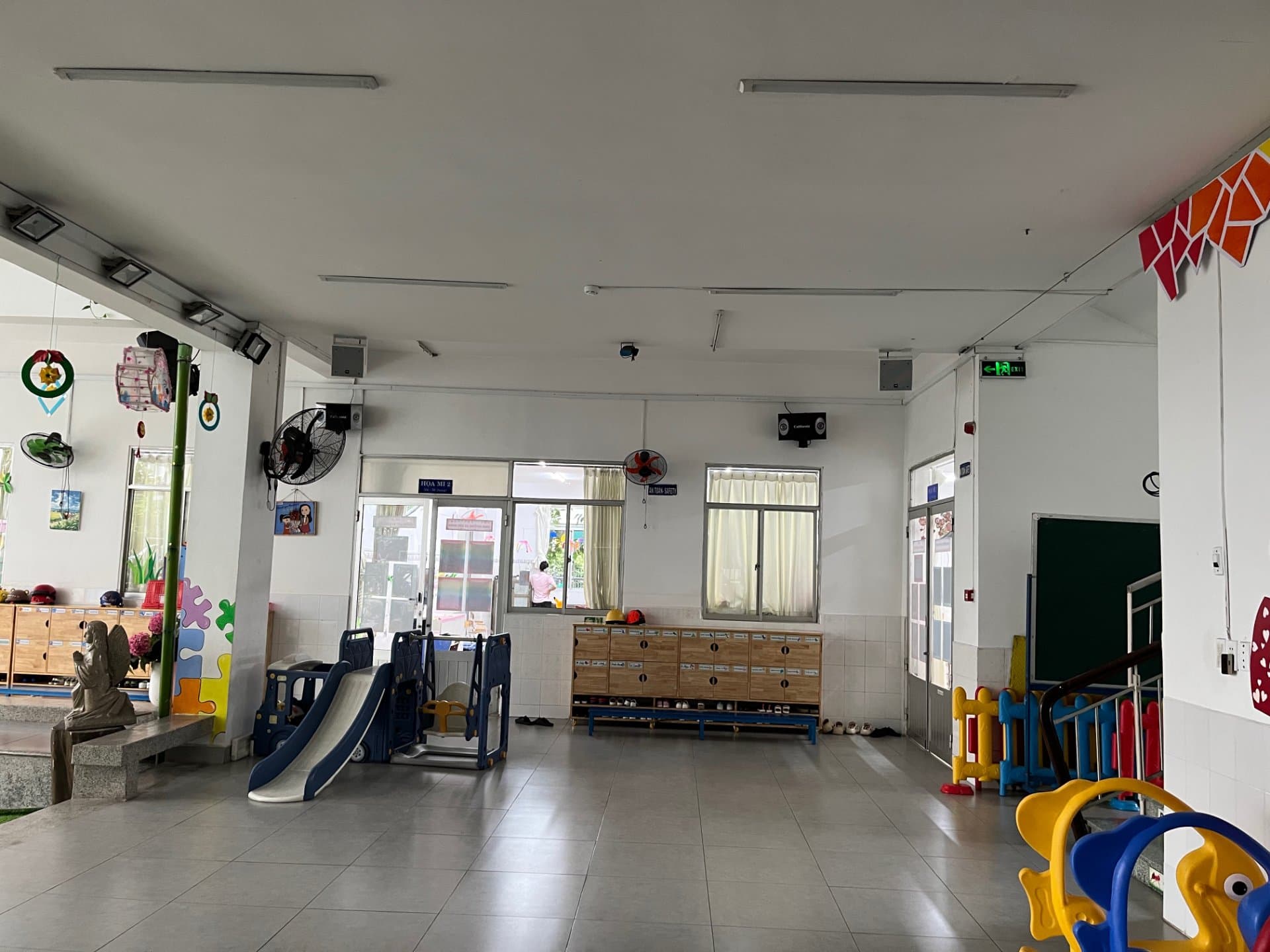

01 / 04 — The nursery activity room in the My Phuoc Chapel building, looking towards the screen and two wall-mounted YME CS speakers.
Before and After
| Metric | Before | After |
|---|---|---|
| Speaker system | Old speakers badly damaged and worn out | Matched YME Audiotechnik CS 9P |
| Speech intelligibility (STI) | 0.45 (fair) | 0.72 (good) |
| Feedback control | Frequent feedback with several microphones open | Microphone levels, routing and scene presets set for each use |
| Running the system | Complicated, many manual steps, easy to get wrong | One-button scene change (KEY Selector) for each celebration |
Frequently asked questions
How does the Multi-KEY button system for each celebration work?
It lets different sound scenarios (Scene Presets) be programmed in advance, each with its own set of active speaker zones, microphone levels and instrument mix. The Sisters press the matching button and the DSP switches the whole system to that scenario within a second.
Are YME Audiotechnik CS 9P speakers suitable for a church or chapel?
Yes. The YME CS 9P has a clear, natural midrange and a compact, good-looking design; tuned with FIR Phase correction on the DSP, it meets the standard needed to reproduce the homily and the choir in the liturgy.
Why is there no subwoofer at My Phuoc Chapel?
For a liturgy that puts speech and acoustic instruments (piano, guitar) first, adding a subwoofer for the deepest bass in a low-ceilinged space (2.8m) easily causes standing waves and boom. The natural low end of the YME CS 9P already gives the piano and the voices enough body.
Do the choir’s ceiling microphones (Shure MX202) cause feedback when opened together with the priest’s microphone?
Several open microphones reduce gain before feedback. Use suitable microphone placement and speaker coverage, set gains carefully and mute or reduce unused channels. Gain-sharing can help on the channels configured for it, but it does not guarantee feedback-free operation.