Case Study / Club & Lounge
An existing Funktion-One system restored and phase-aligned for a low-ceilinged room with a central bar.
Project summary
- Challenge
- Worn drivers; a muddy sound lacking bass but harsh at the top; a low ceiling and hard surfaces making the bar area reverberant.
- Solution
- Bench-tested hardware, re-aimed coverage, boundary loading, time alignment and two-stage limiters.
- Result
- The suitable equipment is restored, the coverage around the bar is fixed and the system has clear protection thresholds.
From First Survey to Handover
01 / Diagnosis
Natrix Bar’s existing sound system — eight 12-inch full-range speakers and two Funktion-One F218 dual 18-inch subs — had worn down: some drivers had failed, and the sound was muddy and short of bass while the mid-highs were harsh and quickly tired guests. The owner wanted to reuse as much of the existing system as possible rather than replace it all. The room works against good sound: a large oval bar sits right in the centre, splitting the guest areas; the ceiling is only 2.8m, with many hard, highly reflective surfaces; and background vibration from Oslo Club upstairs carries down.
02 / Engineering decision
We took apart and checked every driver in the eight 12-inch full-range speakers and the two F218 subs, reconed or repaired the failed ones with proper components, and checked impedance, sensitivity and operation after repair. We then re-aimed the eight full-range speakers, spread evenly around the central bar, so the level is even between the guest areas, and reduced the angles that fired straight at the glass. The L/R subs were placed against the floor to use Boundary Loading, with their tilt re-set towards the main space. Using Smaart measurements, we adjusted the system DSP: we time-aligned the eight satellite speakers and the F218 subs at the selected measurement positions, checked phase around the crossover, cut the excess low frequencies that made the ceiling boom and the resonances that made the glass and LED surfaces harsh, and locked two protection stages, Peak Limiter and RMS Limiter, to reduce overload risk within the agreed operating limits.
03 / Verification and value
The measured bass SPL rose by 4.5dB around the bar through phase alignment, with no extra amplifier power, and coverage is even within ±2.5 dB at every position.
“After Tony Lab restored and tuned the old speakers, they sound far clearer and punchier. Guests at the bar enjoy a solid bass and can still talk to each other easily.”
The Project in Pictures


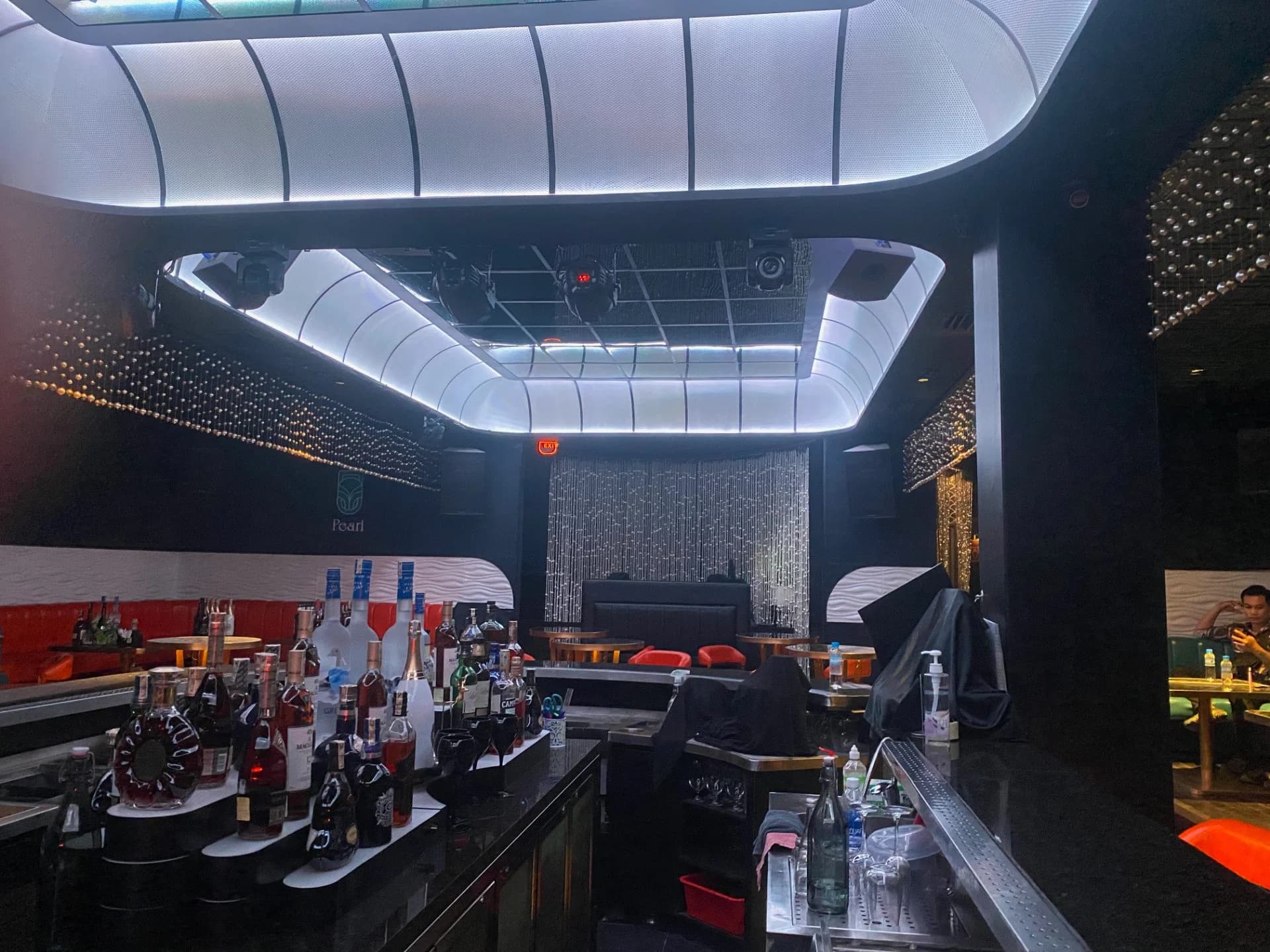
01 / 03 — The view from the stage towards the bar and the guests at Natrix Bar.
Before and After
| Metric | Before | After |
|---|---|---|
| Low-frequency SPL & uniformity | Phase cancellation around the bar from freely placed, unaligned subs | +4.5dB more bass energy, even within ±2.5 dB, no extra power needed |
| Speaker hardware | Some drivers failed, muddy sound, weak bass | Eight 12-inch full-range + two F218 dual 18-inch subs repaired and checked before reuse |
| Equipment investment | Replacing the whole system under consideration | Suitable existing equipment retained; worn components repaired or replaced |
Frequently asked questions
Do old Funktion-One speakers with failed drivers keep their original sound after repair or reconing?
Failed drivers were repaired and coverage and DSP settings revised, retaining equipment suitable for continued use.
Why is a low-ceilinged room (under 3m) harder to tune than a high-ceilinged one?
A low ceiling puts the speakers very close to the ceiling and to the listeners’ ears, so reflections from the ceiling and floor arrive almost at once, causing Comb Filtering that makes the sound muddy and harsh.
Natrix Bar is directly below Oslo Club — does vibration from upstairs affect the tuning?
HPF and EQ on this PA adjust the signal it reproduces; they cannot remove vibration arriving directly through the structure from upstairs. That path needs source control and assessment of vibration isolation or sound insulation. Filtering helps only where unwanted sound is picked up and re-amplified through a microphone.