Case Study / Club & Lounge
An existing system restored and VIP fill speakers added after the floor was rebuilt with a U-shaped mezzanine.
Project summary
- Challenge
- The new mezzanine created an acoustic shadow; some equipment had worn down; a large level difference between the main floor and the VIP area.
- Solution
- Check and repair the equipment that still fitted, add speakers for the side zones, configure the L/R subs and align the timing.
- Result
- The old system is assessed item by item, the VIP area has its own fill speakers and the signal flow is standardised.
From First Survey to Handover
01 / Diagnosis
At the end of August 2020, a long-standing client asked Tony Lab Audio to survey the premises at 19 Do Quang Dau, District 1 — just rebuilt from mezzanines on two sides into a U-shaped mezzanine facing the DJ stage. The change left the existing Funktion-One Dance Stack system (run by MC2 amplifiers and an XTA DSP) with a serious coverage gap at the new VIP positions above and below the mezzanine, and some of the equipment had worn down or failed after years of use.
02 / Engineering decision
We checked every component and repaired the failed units in the Funktion-One Dance Stack, the MC2 amplifiers and the XTA DSP for good. To fill the acoustic shadow without extending the expensive Funktion-One array, we added Verity Monster 4-Way speakers at the VIP positions facing the stage, both on the mezzanine and underneath it. For the low end, we configured a Left/Right Sub Array with six dual 2×18-inch subs, recalculating the phase so the sub-bass sums at its strongest in the middle of the dance floor. On the DSP, we set the Time Alignment at the selected measurement positions between the Dance Stack at the front and the Verity Monster speakers behind to remove comb filtering, reworked the Crossover and set multi-stage Limiters on the XTA DSP to reduce overload risk at the agreed operating levels.
03 / Verification and value
The surveyed level difference between the U-shaped VIP mezzanine and the main floor was within ±2.5 dB. The retained equipment and added fill speakers were checked together at handover, with limiter settings matched to the system.
“The system keeps the tight, round sound Funktion-One is known for on the main floor, while the VIP tables on the mezzanine that used to lack sound now have bass and highs that cover them evenly. Guests in the VIP area now get the same sound experience as the dance floor.”
The Project in Pictures
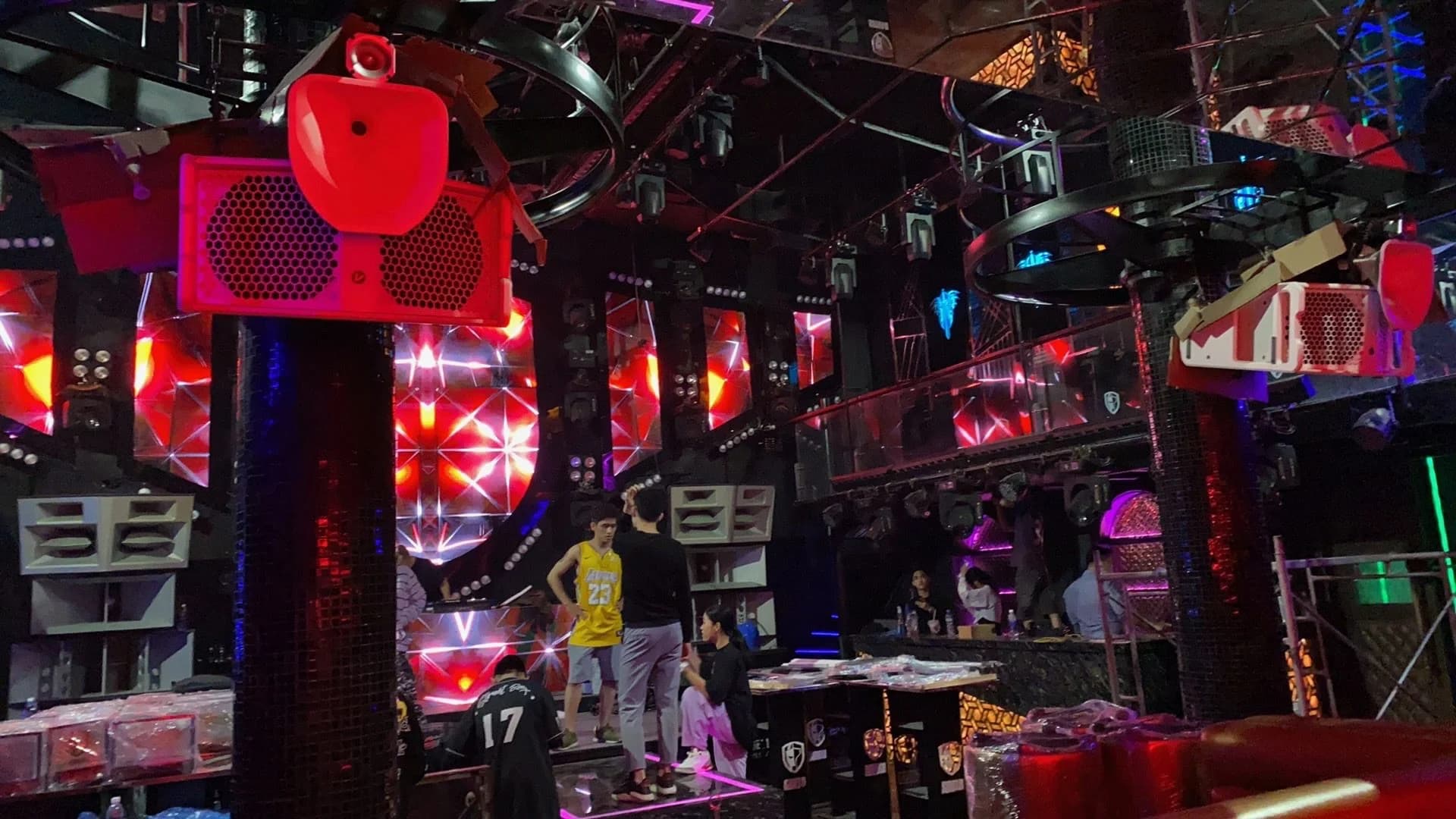

01 / 02 — The Shield Club VIP area being finished, with Monster speakers.
Before and After
| Metric | Before | After |
|---|---|---|
| SPL uniformity | Up to 12dB between the main floor and the U-shaped VIP mezzanine | Difference down to ±2.5 dB |
| U-shaped VIP mezzanine coverage | Acoustic shadow cast by the newly rebuilt mezzanine | Verity Monster 4-Way added, Time Alignment removing comb filtering |
| Equipment investment | Extending the Funktion-One array under consideration (very costly) | The equipment was restored and the system tuned for clearer reproduction, with protection settings checked at handover. |
Frequently asked questions
Why is Time Alignment needed when fill speakers are added for a mezzanine?
Sound from the main speakers on stage and from the fill speakers on the mezzanine reaches the listener at different times. Without the right delay set on the DSP, the waves cross and cancel each other out (Comb Filtering) — making the music thin, hollow and smeared, and tiring the ear very quickly.
Does combining speakers from two brands (Funktion-One and Verity Monster) make the sound uneven?
It can clash if they are simply wired together. But with a dedicated DSP to recalculate the Crossover, balance the Parametric EQ and align the Phase Response between the two systems, the speakers fill each other’s coverage smoothly without losing the main speakers’ signature sound.
Why should the old amplifiers be checked when a club’s layout changes?
When the space grows or more speakers are added, the electrical load and heat of the amplifiers rise considerably. High-end amplifiers such as the MC2, after years of use, need their capacitors, output transistors and cooling checked to avoid voltage sag, thermal cut-outs or blown components at peak hours.